
Policy Priorities
AMRPA 2026 Policy Priorities
AMRPA has developed the following policy agenda to protect patient access to timely, necessary, and high-quality inpatient rehabilitation care in 2026 and beyond.
Advocacy Quick Links
Lead Field-Wide Response to IRF Review Choice Demonstration (RCD)
Strengthen Engagement with Policymakers to Mitigate Impact of RCD Expansion: Closely engage with Centers for Medicare & Medicaid Services (CMS) political leadership and career staff, as well as the Texas and California Congressional delegations, to address the expansion of the RCD in 2026 to new states.
Enhance AMRPA’s Consistent and Compelling Advocacy Message on RCD on Behalf of Rehabilitation Field: Identify all opportunities to hone (and modify, as necessary) AMRPA’s message regarding the administrative, financial, and access burden of the demonstration on member hospitals and patients and work with stakeholder partners to communicate our message to all relevant audiences.
Maintain Robust AMRPA Educational, Operational, and Networking Support for Members in Demonstration States: Proactively engage with AMRPA members, especially in RCD expansion states, to offer comprehensive resources, education, and operational support and timely address any programmatic concerns that arise with the administration of the program.
Ensure Transparency in RCD Operations and Program Reporting: Utilize all available avenues to advocate for the timely publication of robust, accurate, and regularly reported data on demonstration results, especially to counter misperceptions of IRF compliance issues.
Support Meaningful Medicare Advantage and Prior Authorization Reforms to Protect Patient Access to Care
Advocate for Meaningful Legislative & Regulatory Improvements to Medicare Advantage: Enhance advocacy strategy to align with Administration and Congressional objectives around burden reduction and enhancing the patient-provider relationship, while limiting IRF impact in recent models expanding prior authorization in Traditional Medicare (among others).
Continue Strong Partnerships Across the Post-Acute Care Field to Protect Robust Access to Medically Necessary Care: Continue close collaboration with post-acute care provider partners to demonstrate widespread, shared concerns with Medicare Advantage (MA) coverage restrictions and advocate for commonsense solutions.
Bolster Advocacy Message on Medicare Advantage with AMRPA-Driven Data and Patient Stories: Utilize AMRPA survey data, member reports, and media opportunities to strategically expand MA reform discussions in policy debates and public awareness.
Protect Medicare Payment Adequacy for IRFs and Counter Any Models That Could Impede Access
Continue Successful Engagement with CMS to Attain Yearly Positive Payment Increases: Further develop and strengthen relationships with new CMS staff to ensure that IRF payments remain adequate to cover costs and support robust access to care across the nation.
Counter Any Proposals that Would Adversely Impact Care Delivery: Oppose, as needed, any regulatory changes that would cut against IRFs’ core mission and fail to address the specialized needs of the patients served by our members.
Highlight Burden Reduction Opportunities with IRF Coverage, Documentation, and Quality Requirements: Build on Administration and Congressional efforts to cut red tape and minimize burden on providers through legislative and regulatory reforms, particularly through meaningful, patient-focused streamlining of IRF Prospective Payment System (PPS) coverage and payment policies, the IRF Patient Assessment Instrument (IRF-PAI), and the IRF Quality Reporting Program (QRP).
Address IRF Coverage and Access in Existing and Future Alternative Payment Models (APMs)
Address Impacts of Transforming Episode Accountability Model (TEAM) on IRF Referrals and Access to Care: Collaborate with impacted hospitals and CMS staff to ensure that TEAM does not result in IRF restrictions or under-utilization and focus policymaker attention on the need for appropriate, risk-adjusted target pricing. Ensure that the Center for Medicare and Medicaid Innovation (CMMI) receives timely reports of TEAM impacts on IRF providers and patients in need of medically necessary inpatient rehabilitation, particularly as the risk level under the model shifts.
Build Awareness of Long-Term IRF Value Proposition: Work with AMRPA members and networks to bolster referral relationships and educate partners on the longer-term benefits of IRF care.
Respond to Future APM Proposals and Payment Reforms: As appropriate, work with Administration and Congress to ensure any future APMs or Medicare payment-related proposals sufficiently consider post-acute care needs and avoid unintended consequences for IRF patients and providers.
Continue Positive Medicare Payment Advisory Commission (MedPAC) Engagement and Education
Engage Directly with MedPAC Commissioners and Executive Staff to Expand Understanding of Inpatient Rehabilitation: Work to ensure that MedPAC Commissioners and staff fully appreciate the unique care provided in IRFs by facilitating “boots on the ground” exposure to IRF care and visiting AMRPA member hospitals to see care in action.
Challenge MedPAC’s Recommended Cuts to IRF Payment Rates: Demonstrate IRF value proposition and the importance of key IRF investments, such as innovative rehabilitation technology and cutting-edge research, while highlighting negative impacts of MedPAC’s payment recommendations on IRF patients and providers.
Address Misunderstanding of Patient Characteristics Across Post-Acute Care Settings: Combat Commissioner and staff suggestions that PAC patients are “interchangeable” across IRF, Skilled Nursing Facility, Long-Term Care Hospital, and Home Health settings. Continue zealous advocacy related to existing and any emerging cross-sector post-acute care payment models that are based on misunderstandings of IRF coverage rules and the IRF patient population at large.
Develop New Rehabilitation Champions on Capitol Hill & Launch Proactive Legislative Strategy for the IRF Field
Strategically Build Champions in Congress to Ensure Members are Educated on the Field and the Value of IRF Care: Build a new “roster” of Congressional champions in key states and on targeted Committees to augment meaningful advocacy for IRF patients and providers on Capitol Hill.
Develop Proactive Legislative Strategies to Achieve Tangible & Meaningful Change for AMRPA Members: Identify and advance legislative opportunities that promote innovative, patient-focused advancements for the IRF sector, with particular focus on modernizing the IRF regulatory structure and achieving burden reduction in payment and quality reporting.
Enhance AMRPA PAC’s Strategic, Bipartisan Engagement to Support the Election and Re-Election of IRF Champions: Leverage expanded political fundraising to build and strengthen direct relationships with Members on both sides of the aisle.
Accelerate AMRPA’s Rehabilitation Research Agenda
Amplify and Reinforce AMRPA Efforts to Support a Robust Rehabilitation Research Portfolio by Federal Agencies, Academia, and the Private Sector: Through the AMRPA Research Committee, identify and implement AMRPA priorities for rehabilitation research in federal policy and execute Committee efforts to build a foundation for future association-driven research projects.
Increase AMRPA’s Focus on Medicaid Coverage and Payment Issues
Protect Access to IRF Care for Medicaid Patients: Increase AMRPA’s direct advocacy on Medicaid issues at the federal level and partner with AMRPA state hospital association members to assist on state-specific Medicaid concerns.
Conduct Strategic Communications for Pending Oversight Reports with IRF Implications
Develop Strategic Response and Communications Strategy for Planned Oversight Reports: Prepare for 2026 release of Office of Inspector General (OIG) reports on IRF compliance rates and Medicare Advantage post-acute care access – as well as any other new oversight reports – through a comprehensive messaging strategy tailored to Congressional, Administration, and media audiences.
Proactively Engage in Ongoing Development and Management of IRF Quality Measures and Ranking Systems
Ensure AMRPA Meaningfully Participates and is Represented in Key Opportunities Involving the Development and Maintenance of Quality Measures and Ranking Systems: Collaborate with the Partnership for Quality Measurement (PQM), CMS Center for Clinical Standards and Quality (CCSQ), US News and World Report, Newsweek, and any other relevant entities to ensure that quality measures and IRF rankings systems are patient-centered, appropriate, and meaningful for IRF providers and their patients.
Limit the Negative Impacts and Unintended Consequences of QRP Expansions: Identify and effectively educate policymakers on the potential IRF QRP compliance risks, impacts of All-Payer data on quality measures, and administrative burden of unutilized IRF-PAI assessment data or untested and inappropriate data collection for patients under the age of 18.
Updated February 2, 2026.
Latest News & Announcements

2026 Fall Educational Conference & Expo
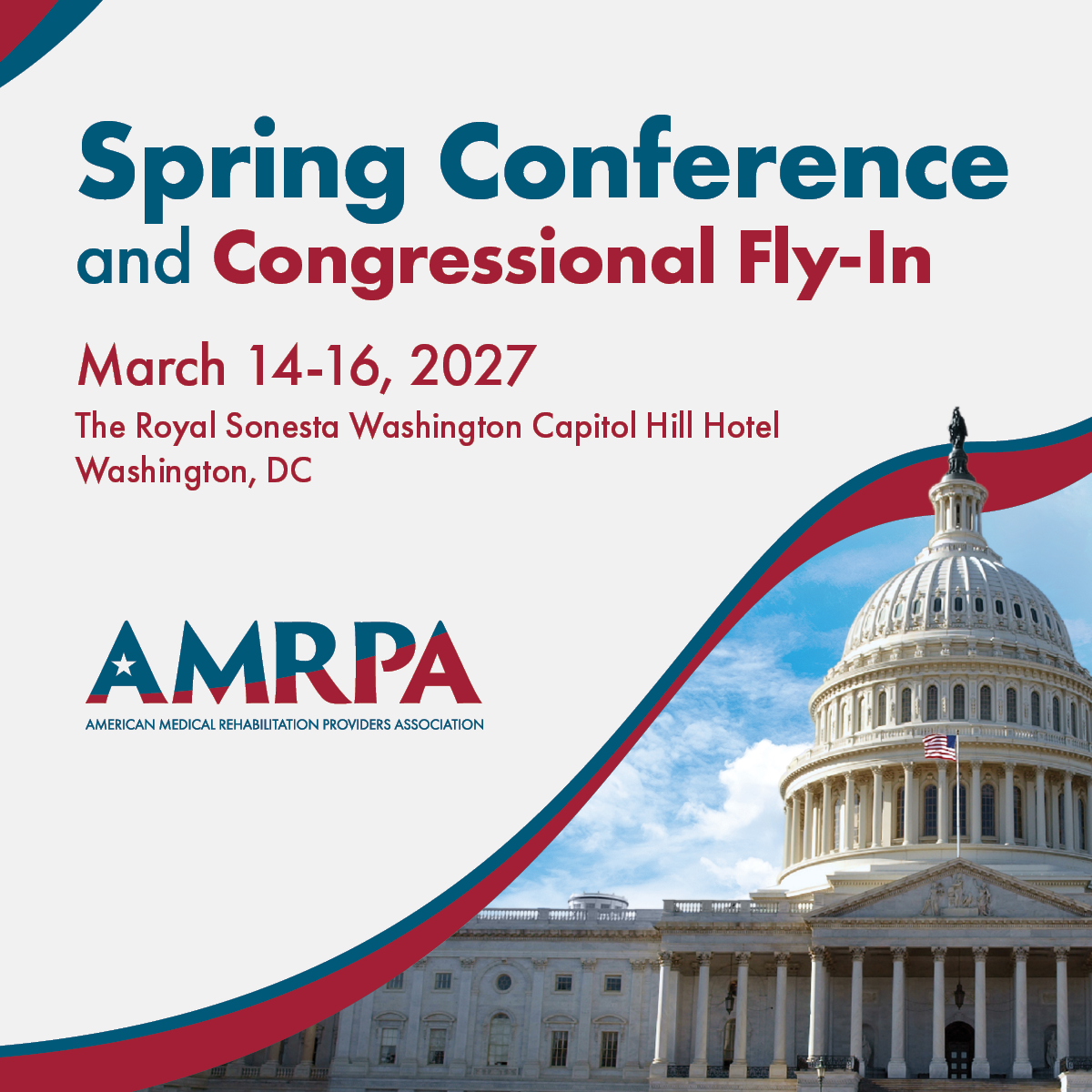
2027 Spring Conference & Congressional Fly-In

2027 Fall Educational Conference and Expo